
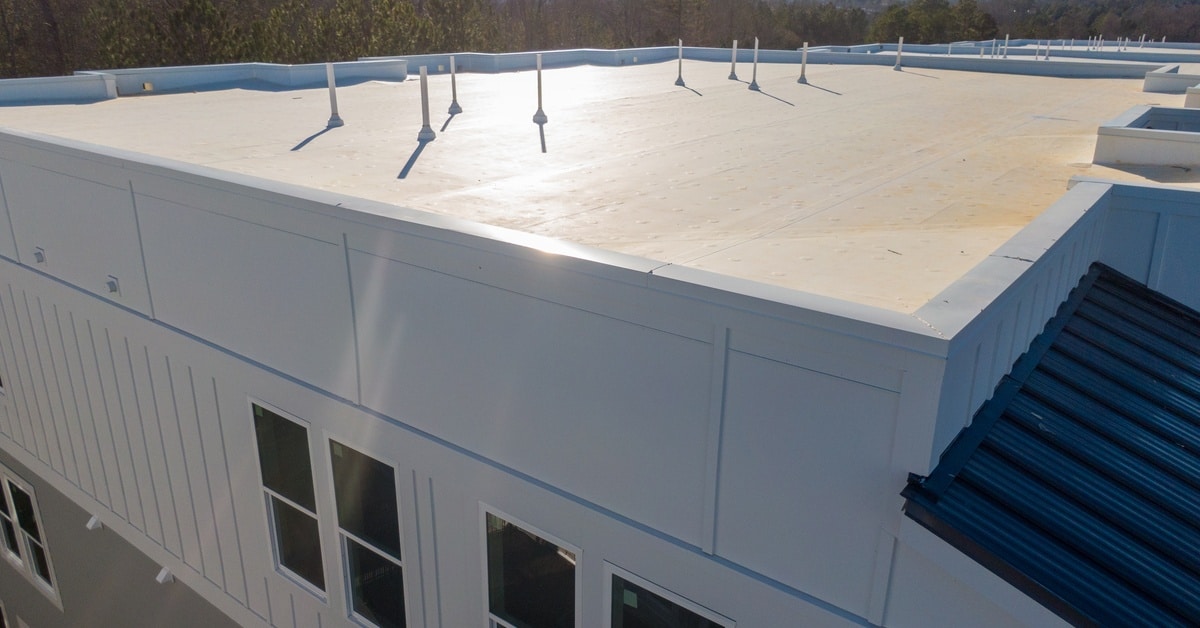
Choosing a roof for a commercial property requires a different approach than selecting materials for a typical home. The size of the building is a factor, but so are the roof slope and the way the property is used. Maintenance needs also play an important role in the decision.
If you are comparing commercial roof types, here’s a guide to your roofing options that can help you understand the systems commonly found on businesses. Some work best on broad, low-slope roofs, but others make more sense when the building has a visible, steeper roofline.
Understanding those differences gives you a better starting point before you schedule repairs or replacement.
How Roof Design Influences Your Options
Before comparing materials, look at the shape of the roof. Many commercial buildings have low-slope roofs that appear flat from the ground. These roofs still need enough slope to move water toward drains or other drainage points.
Low-slope roofs typically rely on membranes or multi-layer roofing systems rather than standard shingles. The material must cover broad areas while protecting seams and roof penetrations from water.
Other commercial properties have pitched roofs that resemble residential structures. Small offices, professional buildings, and converted houses can fall into this category. These buildings need to use different roofing materials because gravity moves water off the steeper roof surface more quickly.
TPO Roofing for Low-Slope Commercial Buildings
Thermoplastic polyolefin, usually called TPO, is a single-ply membrane used on low-slope commercial roofs. Instead of using many individual shingles, installers cover the roof with membrane sheets and join the seams to form a continuous protective surface.
TPO has become a familiar sight on commercial properties because its light-colored membranes can reflect sunlight. That feature can help in sunny climates such as Arizona, where commercial rooftops get intense sunlight for much of the year.
Why the Seams Matter
A membrane roof depends heavily on properly completed seams. Areas around vents and other penetrations also need careful attention, which makes quality especially important. Even a quality membrane cannot perform as intended if installation details allow water to get beneath the system.
PVC Roofing Offers Another Single-Ply Option
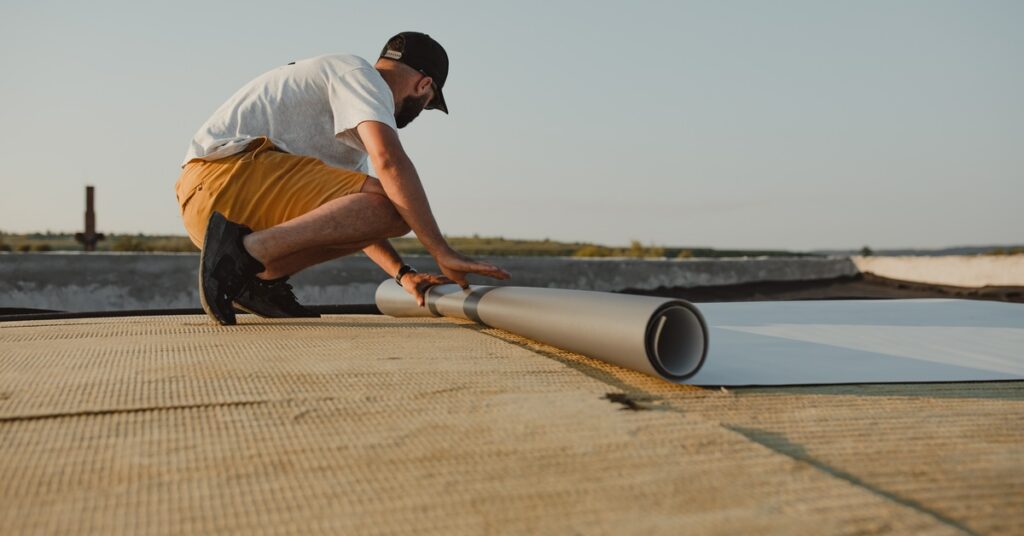
Polyvinyl chloride, or PVC, is another single-ply membrane used on commercial roofs. At first glance, PVC and TPO roofs can look similar because both often use flexible sheets installed across a low-slope surface. However, the materials differ. PVC has its own material composition and performance characteristics.
PVC roofing can be installed using several methods depending on the product and building conditions. As with other membrane systems, installers need to pay close attention to seams and penetrations.
EPDM Roofing Uses a Rubber Membrane
Ethylene propylene diene monomer, commonly shortened to EPDM, is a synthetic rubber roofing membrane. Commercial property owners often recognize it by its dark surface. EPDM has a long history on low-slope buildings. The flexible membrane can cover large roof sections, making it suitable for many commercial layouts.
If you already have an EPDM roof, don’t assume visible wear automatically requires a full replacement. An inspection can show whether repairs are still practical or whether the overall condition points to a larger project.
Modified Bitumen Creates a Multi-Layer Roof
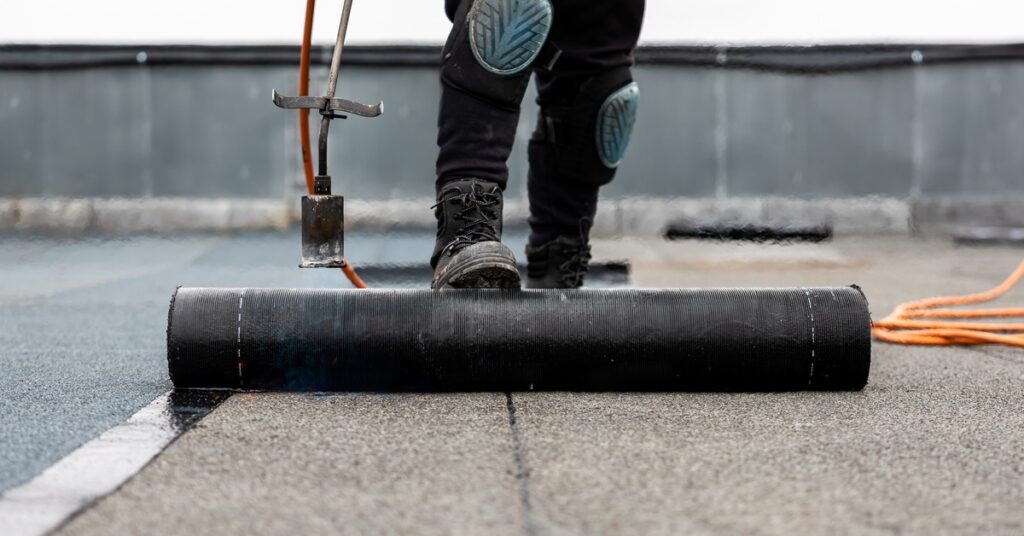
Modified bitumen roofing takes a different approach from single-ply membranes. It uses asphalt-based sheets modified with polymers to improve performance. Two common categories are SBS- and APP-modified bitumen. The layered design gives modified bitumen a substantial roofing surface, making it a proven option for low-slope commercial buildings.
Repairs Depend on the Existing Assembly
Modified bitumen roofs can vary considerably from one property to another. Age and installation methods affect the repair approach. Before authorizing work, have the contractor identify the existing system. That information can prevent the contractor from using an unsuitable repair material or method.
Built-Up Roofing Uses Layers for Protection
Built-up roofing, often called BUR, has been used on commercial buildings for generations. The system creates protection through multiple layers of asphalt and reinforcing material. Traditional built-up roofs can look more substantial than single-ply membranes. Depending on the system, the finished surface can include aggregate or another protective layer.
A BUR roof should receive regular professional attention as it ages. Small surface changes do not always reveal what is happening within the layers below. When water enters a multi-layer roof, tracing the source can take experience. That is one reason an inspection matters before choosing between repair and replacement.
For owners of older commercial properties, knowing whether the building has BUR can also make future roofing conversations easier. You will have a better idea of why the contractor recommends a particular repair approach.
Asphalt Shingles Work on Some Commercial Properties
Not every commercial building has a broad, low-slope roof. Properties with pitched rooflines can use asphalt shingles much like a residential structure. You often see this style on smaller offices and other buildings designed with a more residential appearance. Architectural shingles can provide a familiar look while protecting a properly designed steep-slope roof. Shingle roofs also make individual areas of damage easier to recognize in some cases.
Compare Commercial Roof Types Based on the Building
No single commercial roof system is automatically right for every property. The roof needs to suit the building itself and the conditions it faces.
When discussing your options with a commercial roofer, consider:
- The slope and overall roof design
- The condition of the existing roofing system
- Drainage across the roof surface
- The amount of regular rooftop access
- Areas that have needed previous repairs
- Sun and weather exposure
- Plans for the building over the coming years
These factors give the contractor a more complete picture of the property. They also help you understand why one roofing approach can make more sense than another.
If a roof has developed repeated leaks, for example, another small repair does not automatically solve the underlying concern. The contractor should look at the broader system before recommending the next step.
Work With an Experienced Commercial Roofing Contractor
Learning about different commercial roof types can make conversations with a roofing contractor easier. Still, the roofing options in this guide cannot replace an inspection of the actual building. Existing materials and roof condition have to be considered before anyone can recommend the appropriate work.
Looking for a commercial roofing contractor? Arrow Roofing services property owners in Prescott and surrounding Arizona communities. With more than 40 years in business, our company brings extensive roofing experience to repair and replacement projects.
If your commercial roof has developed a leak, suffered storm damage, or is showing signs of age, you don’t have to figure out the roof system or solution yourself. Our team can inspect the property and explain what the roof needs in straightforward terms. Contact Arrow Roofing to schedule a commercial roof evaluation today.