
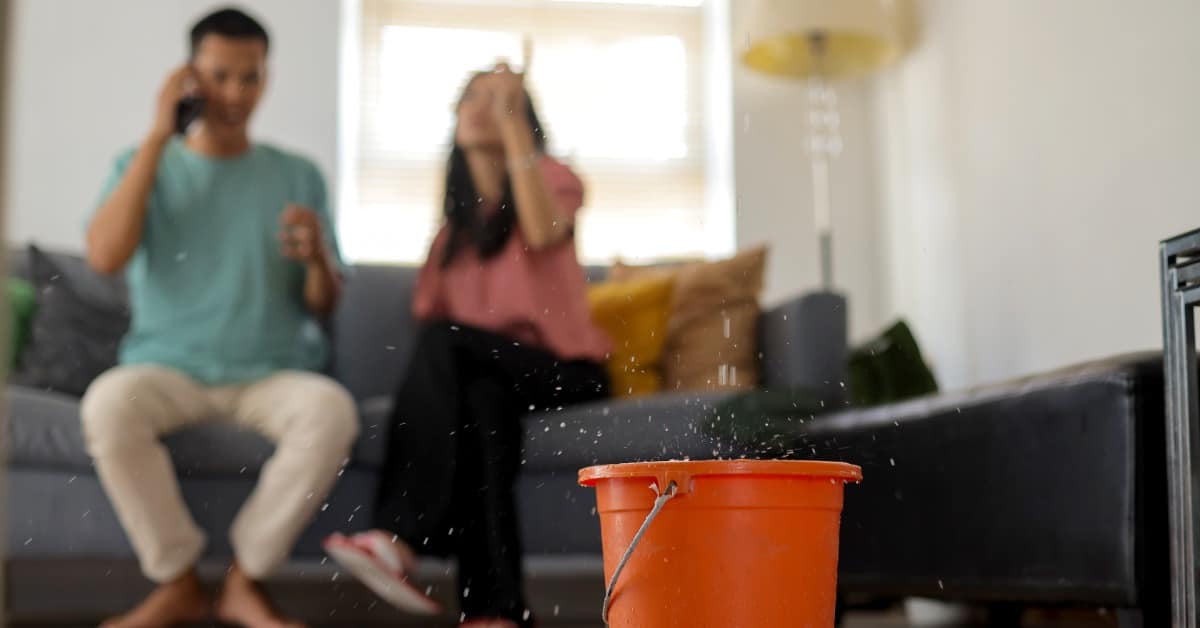
A roof leak can disrupt your day, especially if water starts dripping during a storm. Homeowners often feel unsure where to start, but your priority should be to limit damage, stay safe, and prepare for a professional inspection.
Explore these quick roof leak fixes until a professional can help to protect your belongings and reduce the spread of water.
Start With Safety Before Any Temporary Fix
Put safety first before you take any action. Use caution around water and electricity. If you see water near outlets or electrical cords, stay clear and contact a professional for guidance.
Don’t climb onto the roof during rain. Wet roofs get slippery, and storms make it even riskier. Instead, manage the leak from inside your home. If water drips from the ceiling, keep people and pets away. Treat any bulging or sagging ceiling as unstable until a professional checks it.
When To Leave the Area Alone
If you spot a sagging ceiling or see water near electrical fixtures, don’t try to fix it yourself. Move away and call for help. Sometimes, staying clear is the safest choice until a professional arrives.
Move and Protect Belongings Inside the Home
Once you know the area is safe, move your belongings away from the leak. Relocate furniture, electronics, and keepsakes. If you can’t move something, cover it with plastic or another water-resistant material.
Place towels on the floor where water is landing. A bucket or large container can catch steady drips. If the drip is splashing, put an old towel inside the bucket to soften the impact and reduce spray.
Don’t wait for the leak to get worse before you move your belongings! Roof leaks can quickly change during a storm. A slow drip might turn into a steady flow if wind pushes rain under damaged roofing. Always move items slowly so you don’t spread water into dry areas.
Look for Clues Without Climbing on the Roof
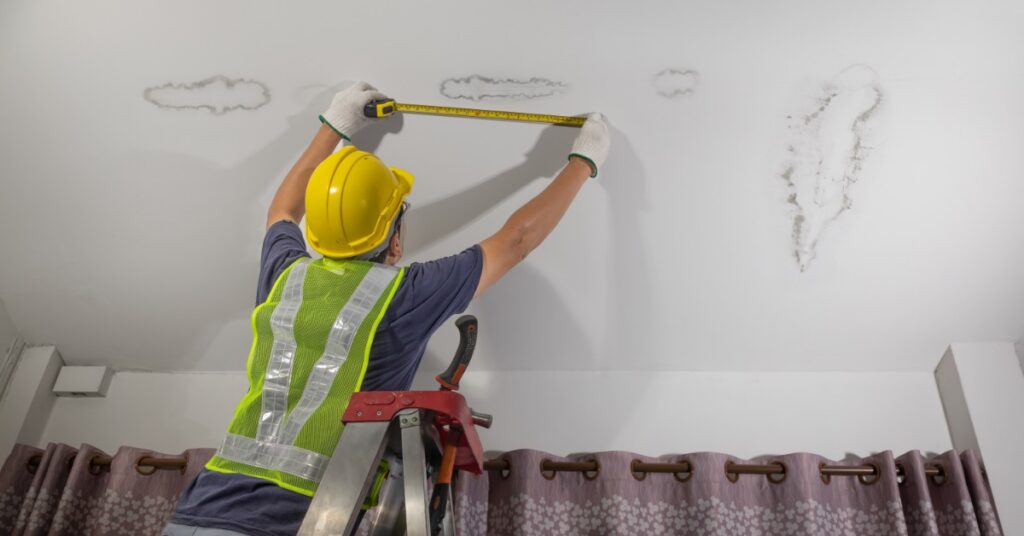
You can still gather helpful information without going onto the roof. Look from the ground and from inside the home. The goal is to observe, not to diagnose the entire problem yourself.
From inside, note where the water appears. Check whether it is near a chimney or ceiling corner. These details can help a roofing contractor narrow down the likely source. From outside, look at the roof from a safe distance. You might notice some missing shingles or a damaged vent cover. Do not use a ladder if conditions are wet or windy!
Here are details worth noting before the roofer arrives:
- The first time you noticed the leak
- The room where water appeared
- The size of the stain or wet area
- Whether the leak happens only during storms
- Whether wind direction seems to matter
- Any visible roof damage from the ground
- Any recent storm or falling debris
- Any past repairs near the same area
These notes can save time during inspection and help you clearly explain the situation when requesting service.
Use Temporary Coverings Only When Safe
Some leaks result from visible openings or missing roofing material. A tarp may reduce water entry, but only use one if you can do so safely. Do not climb onto a wet roof, lean out a window, or reach over a roof edge. Temporary coverings are not worth the risk of injury.
If the leak is in a low, safely accessible area, a professional may install a temporary covering until permanent repairs are possible. Ask about this option when requesting roof repair, especially after storms when many homes may need service.
Avoid Quick Products That Hide the Problem
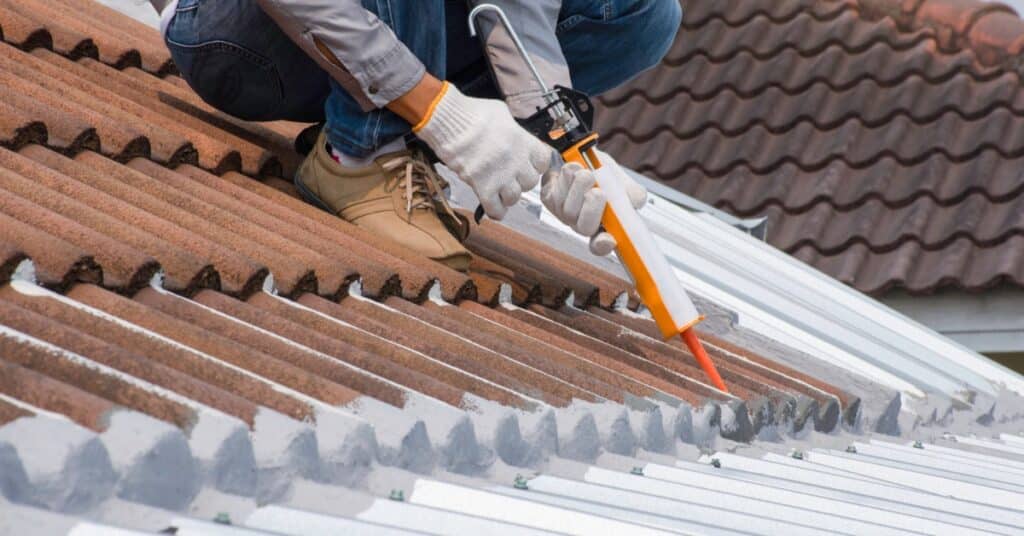
Caulk, spray sealants, and patching products can seem appealing when you have a leak. However, they may hide the real issue or make repairs harder later. A roofing professional should still decide which materials are appropriate for the roof.
Check Gutters and Downspouts From the Ground
Sometimes roof leak symptoms worsen when water doesn’t drain properly. Overflowing gutters can send water back toward roof edges and exterior walls. Blocked downspouts can also create drainage problems during heavy rain.
From the ground, look for water spilling over the gutter edge. You may also notice water collecting near the home. If a downspout extension has shifted, it may send water where it shouldn’t go.
Do not climb a ladder during a storm to clean gutters. That can be dangerous! If you can safely move a downspout extension from the ground, that may help direct water away from the house.
Protect the Attic if It Is Safe To Enter
If your attic is easy to access and safe to enter, check it during or shortly after the leak. Bring a flashlight and step only where it is safe to walk. If the attic has older flooring or poor visibility, do not enter.
You may see water marks along the underside of the roof, which can help identify the general area of the leak. Take photos if you can do so safely. Do not move wet insulation without proper guidance. The purpose of checking the attic is to observe and help the roofer understand where the water may be traveling.
If the attic feels unsafe, skip this step. A professional roofer can inspect the area with the right equipment and experience.
Schedule Professional Roof Repair Promptly
Temporary leak control is a short-term measure. Even if dripping stops after the rain, the roof still requires inspection. A leak may return during the next storm.
A professional can check shingles, flashing, vents, roof edges, and other vulnerable areas. The inspection can show whether the problem is limited to one section or connected to wider roof wear. Keep in mind that a quick interior fix cannot restore the roof’s ability to protect the home.
For older homeowners, a prompt inspection can provide peace of mind. Instead of wondering whether the roof is still vulnerable, you can get a clear explanation and a practical repair plan. Remember, these are only quick roof leak fixes until a professional can help.
What Arrow Roofing Can Do for Homeowners
Arrow Roofing Inc. serves Prescott and surrounding Arizona communities with residential roof repair. With decades of experience, our team understands how storms and sun affect local roofs. Homeowners can always expect clear explanations and practical guidance from us. If you notice signs of a roof leak, our team can inspect the issue and recommend the right repair before the next storm makes it worse. Contact us today!