
Have you ever gotten a roofing quote? If so, you probably stared at the numbers and thought, “How did they come up with that?” Matters can get more confusing if you receive multiple, vastly different quotes. But rest assured that those numbers don’t come out of nowhere. Though different contractors charge different amounts for labor, a large determining factor of your quote is your roof’s square footage, as this determines material costs.
You can figure out your roof’s square footage, and doing so will help you be more informed about your home and in conversations with contractors and insurers. If you want to find your roof’s measurements, read on to learn how to easily calculate its square footage.
When You’d Need This Calculation
First, let’s dig further into the scenarios when you’d want to know your roof’s square footage.
Getting Roofing Quotes
When you contact a contractor for a repair or replacement estimate, they’ll base their pricing on the total roof area. If you already know that number, you can verify their measurements and compare quotes more accurately.
Budgeting for a Replacement
Roofing materials are priced per square, which is a unit equal to 100 square feet. If you know your roof’s total square footage, you can do a rough cost calculation and get a realistic budget range before starting work.
Filing Insurance Claims
After storm damage, your insurance adjuster will measure the affected area. Having your own measurement on hand lets you cross-check their numbers and ask informed questions if something doesn’t line up.
Selling or Buying a Property
Roof size affects a home’s value and the cost of future maintenance. Buyers and sellers who understand their roofs’ dimensions are better prepared during negotiations and inspections.
What You Need Before You Start
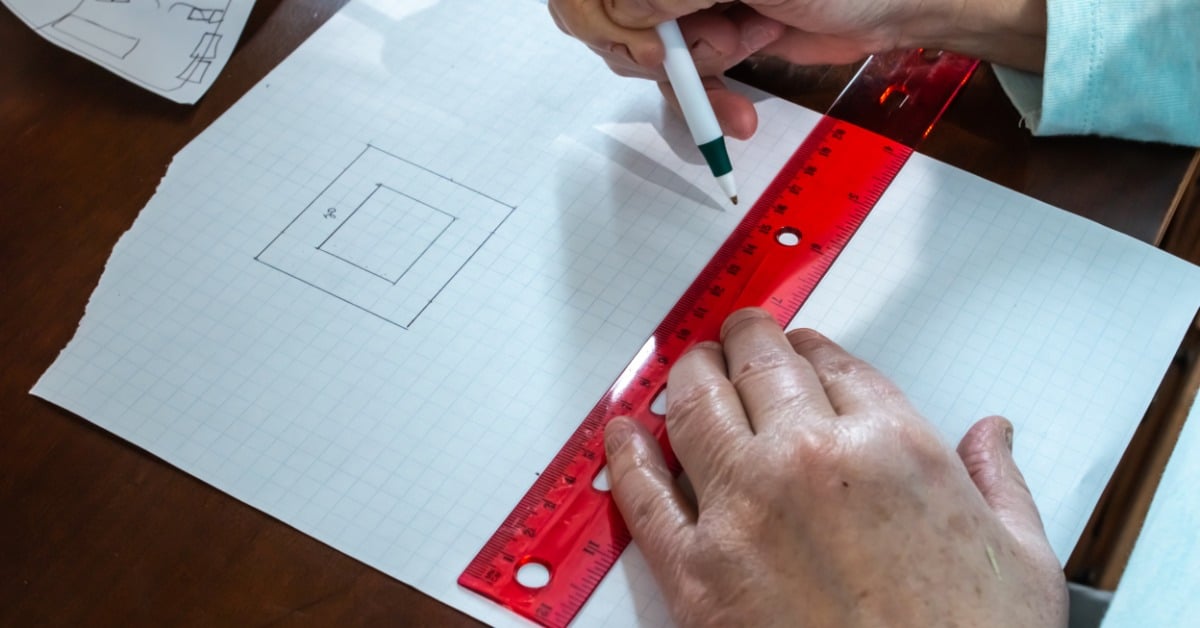
You don’t need to climb onto your roof to get an accurate measurement. All you need are the following:
- a tape measure or a laser measuring tool
- a notepad or phone to record numbers
- a calculator
- access to your home’s footprint (like a property survey or county assessor record)
- the pitch of your roof (check your original building plans or ask your contractor)
How To Calculate Roof Square Footage
The most basic method works by calculating the footprint of your home first, then adjusting for the slope of your roof.
Step 1: Measure the Footprint
Start by measuring the exterior length and width of your home at ground level. Multiply those two numbers together to get your home’s base square footage.
Example: A home that’s 40 feet wide and 60 feet long has a base square footage of 2,400.
Step 2: Account for Overhangs
Most roofs extend past the exterior walls. Figure out how much overhang your roof has on the width and length, and add that extra footage to the calculation.
Example: 42 feet x 62 feet = 2,604 square feet.
Step 3: Apply the Pitch Multiplier
Roof pitch describes how steeply your roof slopes. A flat or low-slope roof needs little adjustment, but steeper roofs cover significantly more surface area than the base footprint suggests. Below is a condensed pitch multiplier chart:
| Roof Pitch | Multiplier |
| Flat (0/12) | 1.00 |
| 2/12 | 1.02 |
| 4/12 | 1.05 |
| 6/12 | 1.12 |
| 8/12 | 1.20 |
| 10/12 | 1.30 |
| 12/12 | 1.41 |
Example: If your roof has a 6/12 pitch, multiply 2,604 by 1.12 to get a total square footage of approximately 2,916.
Step 4: Convert to Roofing Squares
Divide your total square footage by 100 to find the number of roofing squares. That’s the number your contractor will use to estimate materials and labor.
Example: 2,916 ÷ 100 = 29.16 squares.
How To Handle Complex Roof Shapes
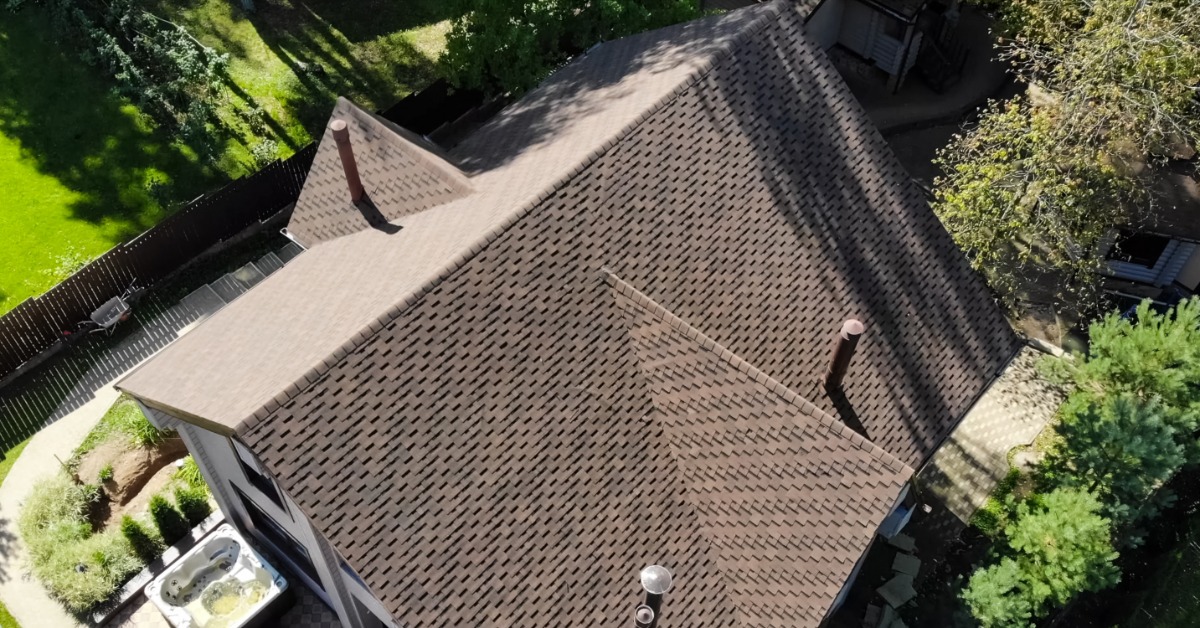
The equation we just walked through only works if your roof is a flat or gabled rectangle, but that’s not the case for many properties. Hip roofs, L-shaped homes, and homes with dormers or multiple roof sections require you to break the roof into separate shapes, calculate each one individually, then add them together.
For an L-Shaped Home
Divide the footprint into two rectangles. Measure each section separately, multiply length by width for each, then add the two totals together before applying the pitch multiplier.
For Dormers
Dormers are usually small, but they do add surface area. Measure the dormer’s roof area separately and add the result to your main roof total. Keep in mind that dormers feature triangular sides, the formula for which is below.
For Hip Roofs
A hip roof slopes on all four sides. You’ll calculate each triangular and trapezoidal section individually.
- For triangles, the formula is (base x height) ÷ 2.
- For trapezoids, it’s ((base 1 + base 2) ÷ 2) x height.
Add all sections together, then apply your pitch multiplier.
What To Do With Your Number
Once you have your square footage, you’re in a much stronger position when talking to contractors or insurers. You can compare material costs, understand labor estimates, and flag any numbers that seem off.
In Arizona’s climate, where heat and UV exposure accelerate roofing wear, staying ahead of your roof’s condition is key to keeping repair costs manageable. Knowing your roof’s size is simply part of being a proactive property owner.
Take the Next Step With a Pro
Now that you know how to perform a roof measurement and easily calculate square footage for your property, you’ve got the foundation for a smarter roofing conversation.
However, we want to acknowledge that some roofs are much more complex than we had the time to cover in this blog. For example, many homes feature an L-shaped roof with dormers and multiple gables on each wing. If this is the case for your property, though you can attempt the math yourself, you might just prefer to have a professional who has seen hundreds of similar roofs do the calculations.
In either case, whether you’re preparing for an upcoming project or wanting to offload the math, Arrow Roofing is here for all your Arizona roofing needs. We are a trusted roof replacement contractor operating in the Prescott area, and we know a thing or two about measuring. Moreover, we pride ourselves on our customer-first philosophy. That’s why we offer free inspections and quotes, and we’d be happy to break down our reasoning transparently. Work with us if you want professional measurements, accurate material estimates, and a clear scope of work from the start. Inquire today for your commercial or residential property, and give your roof the attention it deserves!